Executive Summary & Quick Answer
How do med spas launch a private label skincare line? Start with a focused 3-to-6 product starter collection tied to your most-requested treatments, choose pre-stabilized professional formulations from a U.S.-based manufacturer, sample before you commit, select packaging and waterproof labels that match your practice aesthetic, and train your front desk to recommend the line at every visit. A well-executed private label program typically lifts retail revenue 3-to-5x over carrying third-party brands while deepening patient loyalty and lifetime value.
If you run a med spa, you already have the most valuable asset in skincare retail: a room full of patients who trust your clinical judgment and ask you what to use at home. The question is whether the bottle they walk out with carries your practice's name — or a national brand they can buy cheaper on Amazon tomorrow. Private label skincare for med spas turns that moment into recurring, high-margin revenue that stays inside your practice.
This guide walks through exactly how to build a branded retail line for a medical spa — which products to start with, how to choose a manufacturer, what packaging and labels actually matter, how to price and merchandise, and how to train your team so the line sells itself. It is written specifically for med spa owners, medical directors, nurse injectors, and practice managers in the United States.
Why Med Spas Are Uniquely Positioned to Win with Private Label
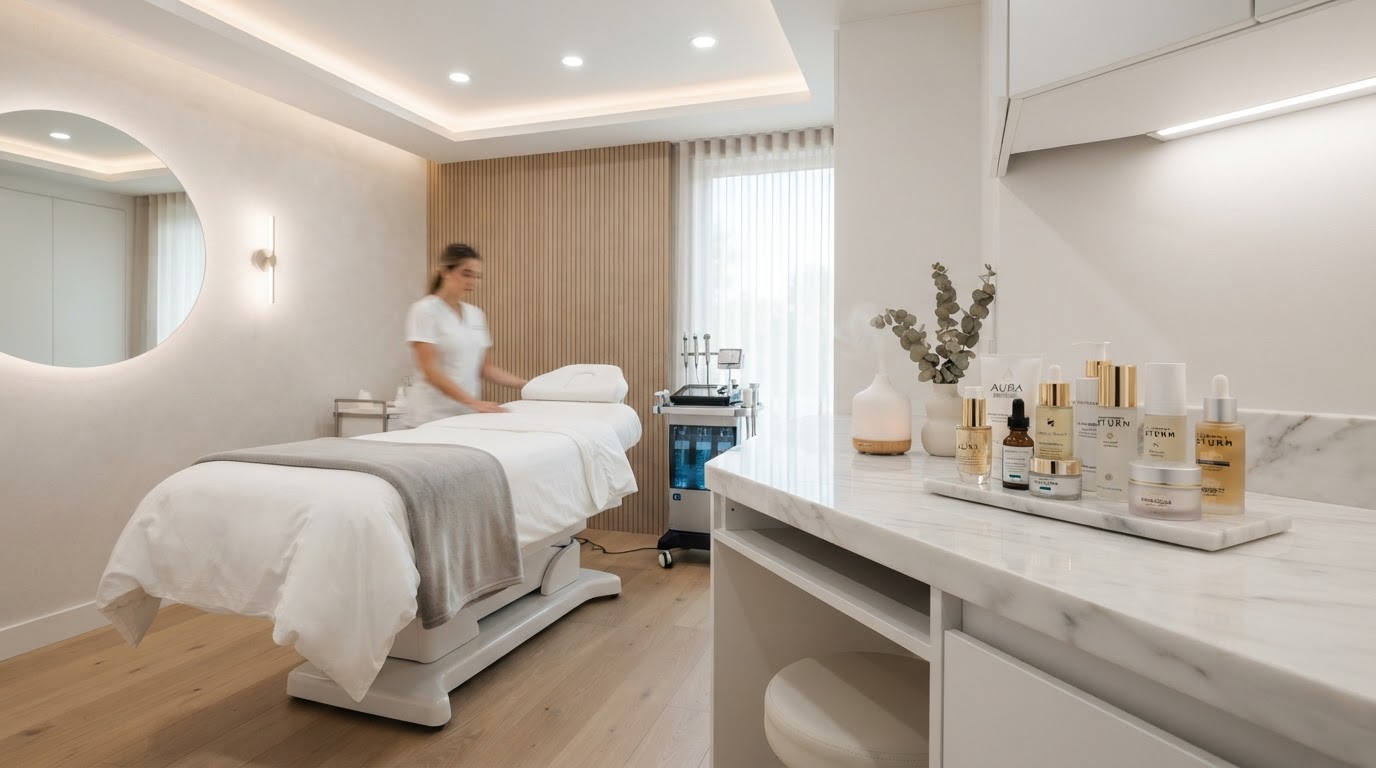
A med spa is not a retailer — it is a trusted clinical environment. Patients come for neurotoxins, fillers, chemical peels, microneedling, and laser treatments, and they leave asking the same question every time: "What should I use at home to protect these results?" That question is a retail opportunity that most practices hand to someone else's brand.
When the answer is your own practice-branded serum or cleanser, three things happen at once. First, trust multiplies — the patient receives a direct extension of your expertise, not a recommendation to go shop elsewhere. Second, margin multiplies — private label retail typically carries 60%–70% higher margins than reselling national professional brands. Third, loyalty multiplies — every morning and night the patient sees your logo in their bathroom, which keeps your practice top of mind for the next treatment.
The Business Case: Private Label vs. Carrying Third-Party Brands
| Factor | Carrying National Brands | Private Label Line |
|---|---|---|
| Retail margin | 30%–40% wholesale markup | 60%–70%+ typical |
| Price competition | Patients find it cheaper online | Only your practice sells it |
| Brand equity | Builds someone else's brand | Builds your practice brand |
| Reorder loyalty | Patient can buy anywhere | Reorders come back to you |
| Control | Brand sets pricing & promos | You control everything |
The core problem with national brands is leakage. A patient samples the product in your treatment room, then orders it online at a discount. You did the clinical work of building trust; a marketplace captured the sale. A private label line closes that leak — the only place to buy your practice-branded Hyaluronic Acid Serum is your practice.
Step 1: Choose Your Starter Product Assortment
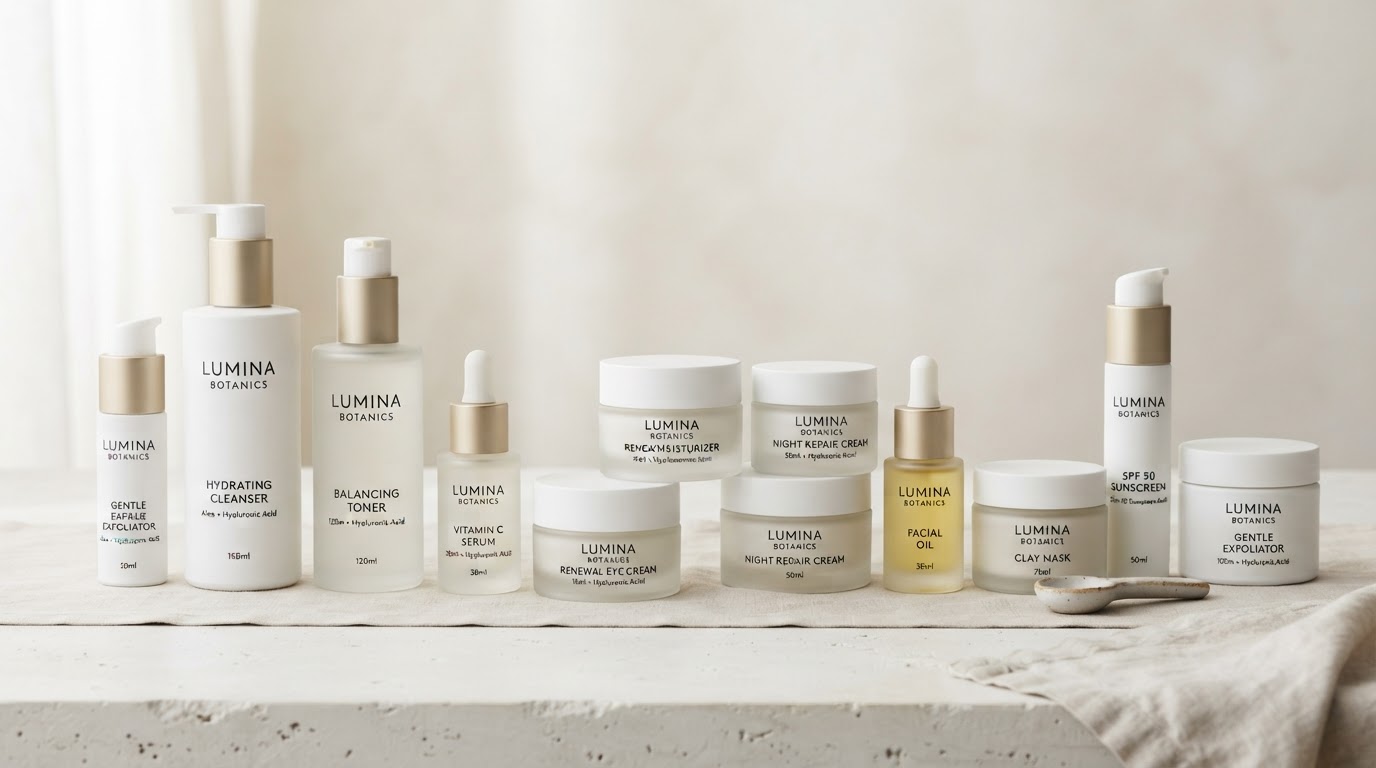
The most common mistake med spas make is trying to launch too many products at once. A focused starter collection of three to six hero products tied to your top treatments sells better, launches faster, and requires less upfront capital. You can always expand.
Recommended starter products by treatment focus
- Post-procedure recovery: a gentle cleanser, a hyaluronic acid serum, and a barrier-repair moisturizer — the three products every laser, peel, or microneedling patient needs at home.
- Anti-aging / daily regimen: a vitamin C serum, a retinol or peptide serum, an eye cream, and a daily SPF — a complete morning-and-night routine.
- Acne / blemish-prone: a salicylic cleanser, a blemish-control toner, and a lightweight oil-free moisturizer.
- Brightening / hyperpigmentation: a glow peel pad, a brightening serum, and a tinted or non-tinted SPF.
You can explore all of these and more in our formulations catalog — 80+ professional, pre-stabilized formulations across cleansers, toners, serums, moisturizers, masks, suncare, and specialty treatments.
Step 2: Choose a U.S.-Based Private Label Manufacturer
Your manufacturer is an extension of your practice brand. If a formula separates on the shelf, if a label smears in a humid bathroom, or if a shipment arrives late for a holiday promotion, it is your practice's reputation that takes the hit. Evaluate any manufacturer against the criteria that matter for a clinical environment:
- Formulation stability: are the formulas pre-tested for shelf-life and stability? A reputable partner can speak to preservative systems, pH, and compatibility.
- Sampling program: can you touch, smell, and apply the product before committing to production? Never skip this step. Order Inspira Skin samples here.
- Flexible MOQs: do the minimums let a single-location med spa launch realistically, or are they built for large e-commerce brands only?
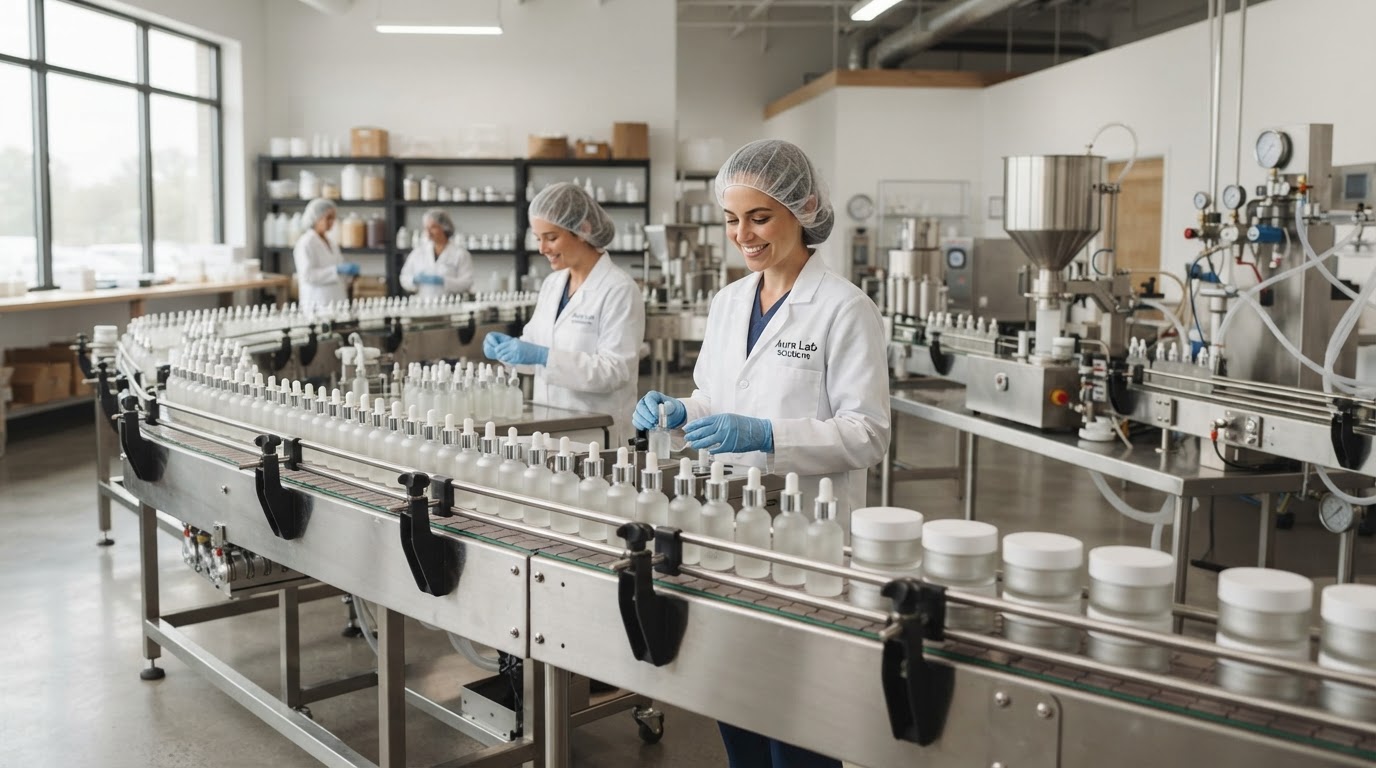
- U.S.-based manufacturing: where is the product made? Domestic production means shorter lead times, consistent quality, and easier communication. Inspira Skin manufactures and packages in Rockaway, New Jersey.
- Compliance support: does the partner help with compliant cosmetic label copy and flag claims that create regulatory exposure?
- Experience with med spas: a manufacturer who understands clinical environments is different from one who only works with mass-market e-commerce.
For a deeper framework, read our complete guide on how to choose a private label skincare manufacturer.
Step 3: Select Packaging That Matches Your Practice Aesthetic
Packaging is your brand's first impression and a daily functional object in your patient's bathroom. For med spas, the packaging should feel clinical-premium — clean, modern, and consistent with the look of your treatment rooms.
Packaging suites to consider
- Clean Clinical White (airless pumps & jars): the most popular med spa choice — looks medical, premium, and works with almost any practice branding.
- Midnight Matte Black: a modern, elevated look for practices with a darker or more luxurious aesthetic.
- Natural Bamboo & Clean White: a wellness-forward look that pairs well with holistic or integrative practices.
- Frosted Glass & Silver Chrome: a premium, apothecary-style presentation.
In-stock standard packaging keeps costs down and lead times short; premium and custom components are available for practices that want a more distinctive look (typically at higher minimums). Review the full range on our packaging & labeling page.
Step 4: Get Waterproof Labels and Compliant Artwork
Skincare lives in showers, gym bags, and bathroom counters. A label that peels or smears the first time it gets wet undermines everything else you invested in. Confirm your manufacturer produces true waterproof labels — not paper labels with a thin coating that fails after a few weeks.
Equally important is label compliance. Cosmetic labels in the United States have real requirements: ingredient declaration in descending order of predominance, net contents, product identity, and a responsible party. A good manufacturer helps you navigate this and flags claims that cross from cosmetic language into drug claims. Your partner should never let you print a non-compliant label.
Step 5: Price for Margin and Reorder
Private label pricing should reflect the clinical trust behind the recommendation, not undercut online marketplaces. A common, sustainable structure for a med spa:
- Cleansers & toners: positioned as daily essentials, accessible price point to encourage every patient to start.
- Serums (the hero products): the highest-margin and highest-trust items — vitamin C, hyaluronic acid, retinol, peptide, brightening serums. This is where retail revenue concentrates.
- Moisturizers & SPF: the reorder drivers — patients run through these fastest, which brings them back to your practice.
- Treatment products (peel pads, eye creams): premium add-ons that lift average basket size.
Because your only competition is yourself, you are not forced into a race-to-the-bottom on price. Price to the value of the clinical recommendation, and use reorders as the loyalty engine.
Step 6: Merchandise and Train Your Team
A private label line does not sell itself from a shelf. The front desk and clinical team are the sales engine. Three practices make the difference between a line that collects dust and one that drives real revenue:
- Tie every recommendation to a treatment. After a peel, hand the patient the post-procedure kit. After laser, recommend the barrier repair moisturizer and SPF. The product is a continuation of the treatment, not a separate sale.
- Train the team on each product. Every front desk staff member, nurse, and provider should know what each product does, who it is for, and how to recommend it in one sentence. A good manufacturer provides training and educational materials — ask for them.
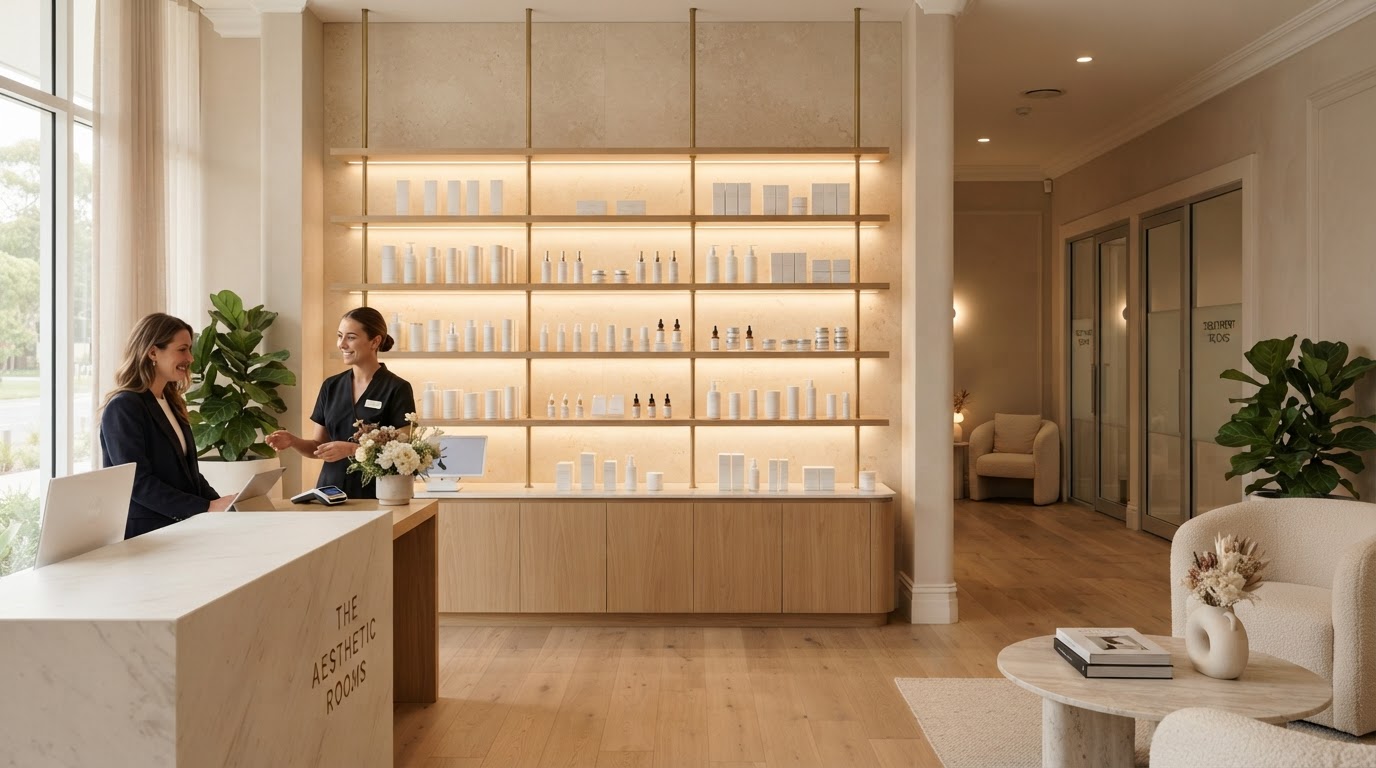
- Display with intention. A clean, lit retail wall near checkout outperforms a crowded back shelf every time. Group products into visible regimens (morning, evening, post-procedure) rather than by category.
Step 7: Launch, Measure, and Expand
Launch with your starter collection, track which products move fastest and which treatments drive the most retail attachments, and expand from there. Most successful med spa lines grow into a full regimen over two to three reorder cycles — adding eye creams, masks, specialty treatments, and body care as patient demand signals.
The right manufacturer stays involved through this growth — helping with reorders, line expansion, and new product selection. That ongoing consultative support is what separates a vendor from a partner. See the full private label process from consultation to delivery.
Common Questions Med Spas Ask About Private Label
How many products do I need to launch a med spa skincare line?
Most practices launch with three to six products — enough to cover a daily regimen or a post-procedure kit, but focused enough to manage easily. You do not need a full 12-product line on day one.
What is the minimum order quantity for a med spa?
MOQs vary by formulation, packaging, and customization. Inspira Skin offers flexible minimums designed for practices at every stage, so a single-location med spa can launch without overcommitting to large inventory. We discuss specifics during your consultation.
Can I sample products before committing to a production run?
Yes — and you should. Inspira Skin offers a structured sampling program so you can evaluate texture, absorption, scent, and feel before you choose. You can order samples here.
Are the products made in the USA?
Yes. Inspira Skin manufactures and packages in the United States (Rockaway, New Jersey) with an emphasis on quality, consistency, and professional standards.
Do you help with labels and branding?
Yes. We assist with waterproof label production and compliant label artwork, and we provide marketing and training resources to help your team sell the line. See our packaging & labeling options.
Next Steps for Your Med Spa
The fastest way to evaluate whether private label is right for your practice is to request samples and book a consultation. You can order samples here and book a consultation here. If you are still scoping your line, our skincare brand quiz recommends formulations and next steps in two minutes. Learn more about how we work with med spas here.
- 80+ pre-stabilized, professional-grade formulations
- Flexible MOQs and a structured sampling program
- Clinical-premium packaging with true waterproof labels
- U.S.-based manufacturing and ongoing consultative support