Executive Summary & Quick Answer
How do you choose a private label skincare manufacturer? Evaluate every candidate against twelve criteria: formulation quality and stability, minimum order quantities, a real sampling program, packaging options, true waterproof labels, U.S.-based manufacturing, reliable lead times, label and claim compliance support, marketing and training resources, experience with your audience, customization flexibility, and ongoing consultative support. A partner who answers all twelve clearly is a serious candidate; one who dodges several is not.
Launching a skincare line is one of the most rewarding decisions a med spa, dermatology practice, plastic surgery office, or skincare entrepreneur can make — but it begins with a single, high-stakes decision: choosing the right private label skincare manufacturer. The partner you select determines your formulation quality, your packaging, your label compliance, your lead times, your margins, and ultimately whether your brand earns trust at the shelf.
This guide walks through everything you should evaluate before signing with a private label skincare company — the questions to ask, the red flags to watch for, and the exact criteria that separate a true manufacturing partner from a bottler that simply slaps your logo on a generic formula.
What Is a Private Label Skincare Manufacturer?
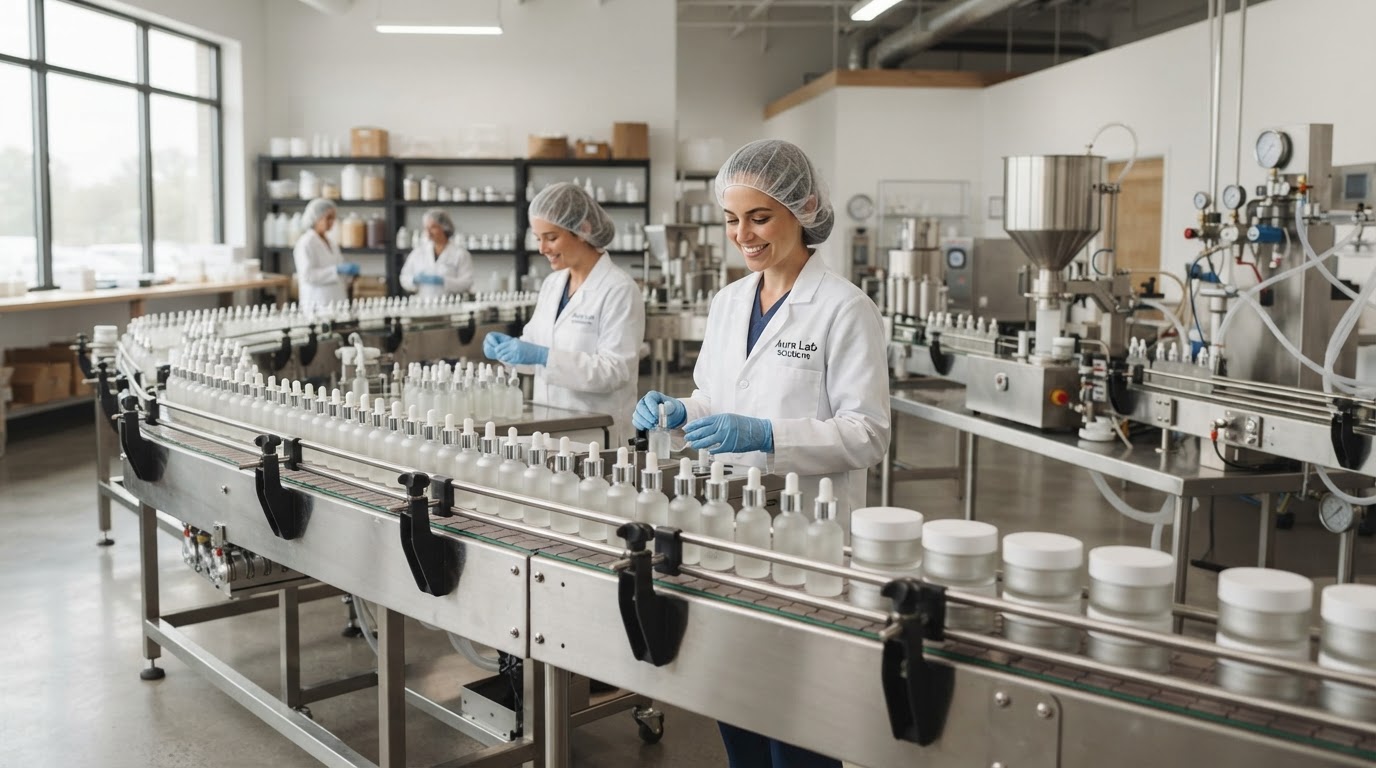
A private label skincare manufacturer produces professional-grade skincare formulations that you sell under your own brand name. Rather than building a lab from scratch or developing a formula from zero, you select from a portfolio of proven, pre-stabilized formulations, then customize the packaging, labels, and branding. The manufacturer handles filling, assembly, quality control, and shipping — you own the brand and the customer relationship.
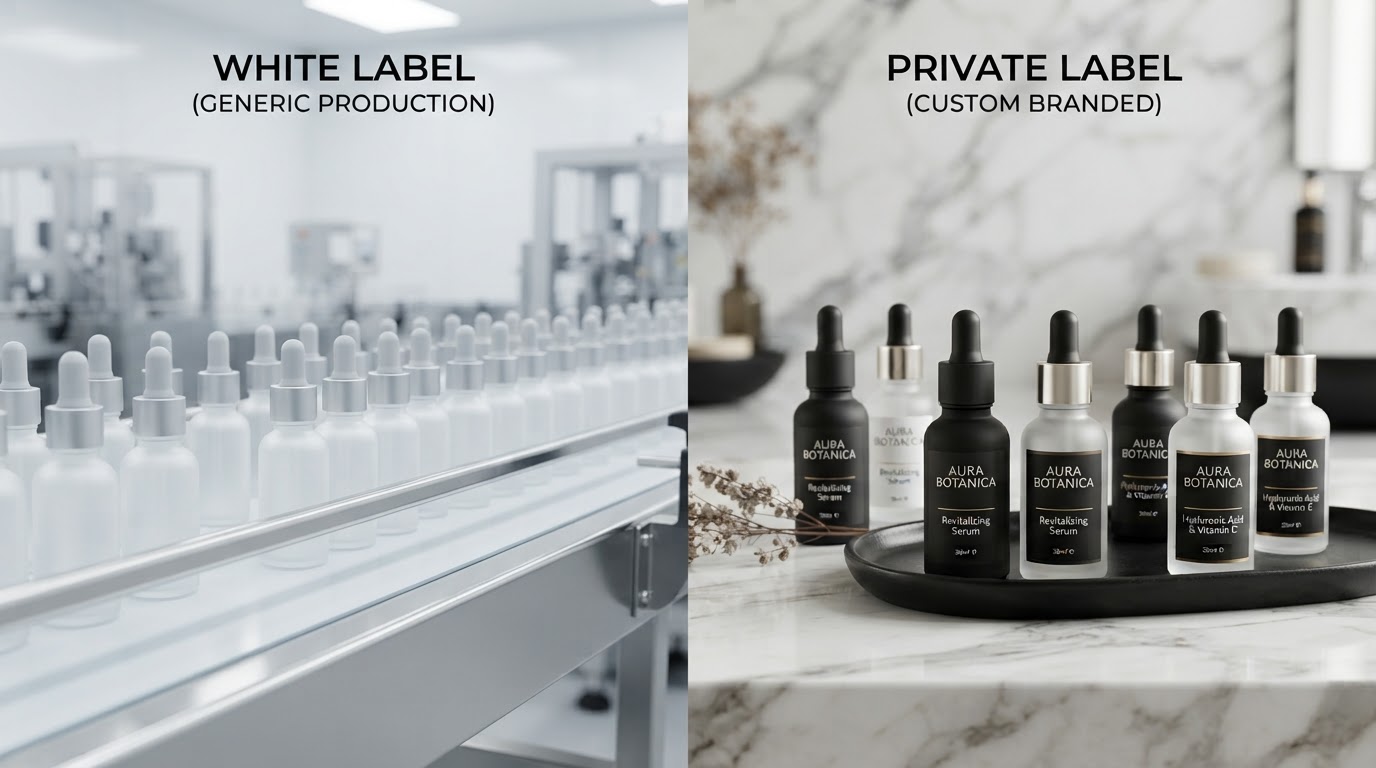
This is different from white label (where the same generic product is sold to many sellers with minimal customization) and custom formulation (where a formula is built from scratch for one brand, typically at far higher cost and longer timelines). Private label sits in the sweet spot: proven, stable formulations with meaningful flexibility in branding, packaging, and product selection. For a deeper comparison, see our guide on private label vs. custom formulation.
Why Your Choice of Manufacturer Matters So Much
Your manufacturer is not a vendor — they are an extension of your brand. If a formula separates on the shelf, if a label smears in a humid bathroom, or if a shipment arrives three weeks late for a holiday launch, it is your brand that takes the reputation hit, not theirs. The right partner protects your brand at every step.
The wrong partner creates problems you cannot fix with marketing: unstable formulas, hidden minimums, non-compliant labels, and silent quality drift between batches. That is why the evaluation process below matters — it is your insurance policy.
The 12 Criteria for Choosing a Private Label Skincare Manufacturer
1. Formulation Quality & Stability
The single most important factor. Ask whether formulations are pre-tested for stability and shelf-life. A reputable manufacturer can speak to preservative systems, pH, and compatibility testing. Beware any partner who cannot answer basic stability questions or who treats formulation as an afterthought. At Inspira Skin, every formulation in our 80+ product portfolio is a proven, stabilized formula — you can explore the full catalog here.
2. Minimum Order Quantities (MOQs)
MOQs dictate your upfront capital and how many SKUs you can realistically launch. Some manufacturers require 5,000+ units per SKU — workable for an established brand, but a barrier for a first-time launch. Look for a partner with flexible, low MOQs that let you validate demand before committing to large production runs. Inspira Skin offers flexible minimums designed for practices and entrepreneurs at every stage; see our start-your-skincare-line guide for the full cost picture.
3. Sampling Program
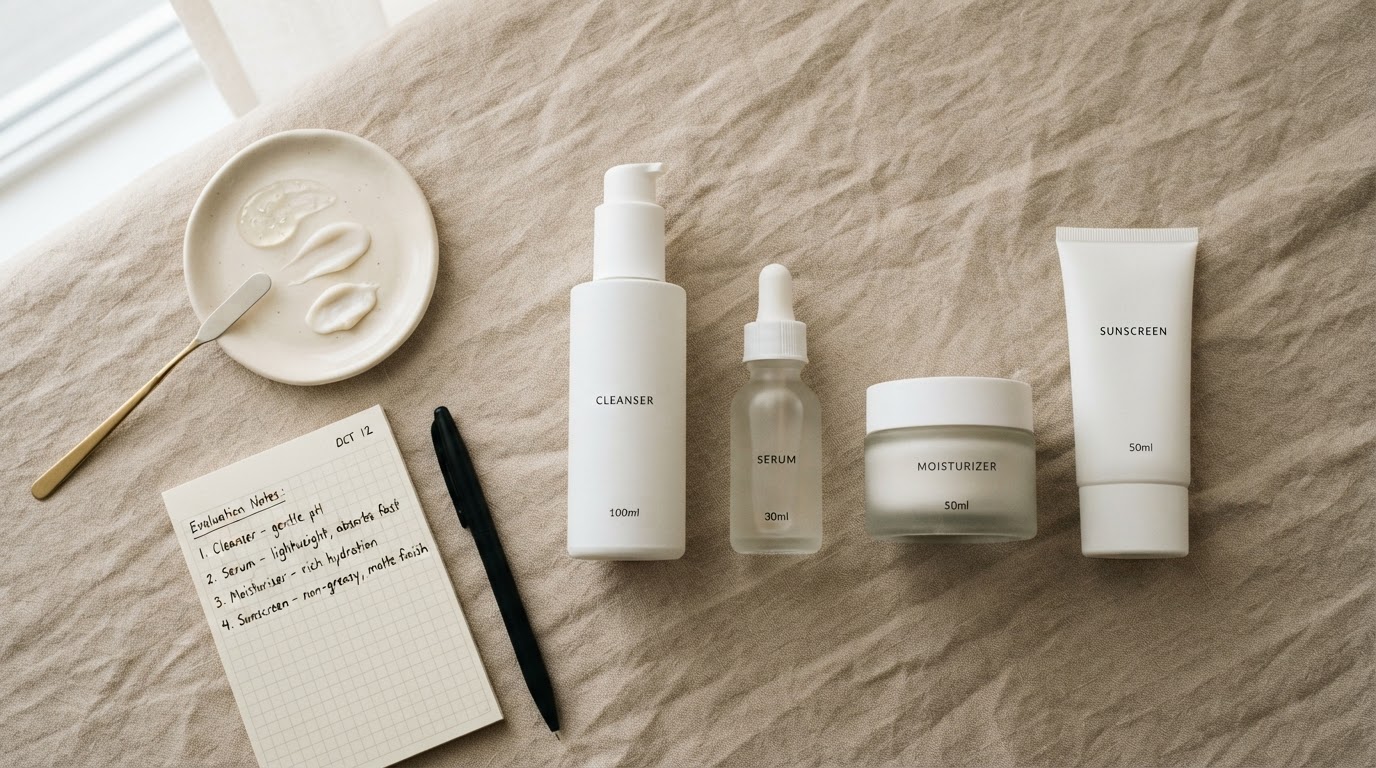
Never commit to a production run without touching, smelling, and applying the product. A serious manufacturer offers a sampling program so you can evaluate texture, absorption, scent, and overall feel before you choose. If a partner will not send samples, walk away. You can order Inspira Skin samples here.
4. Packaging Options & Quality
Packaging is both your brand's first impression and a functional necessity. Evaluate whether the manufacturer offers in-stock standard packaging (faster, lower cost) and premium or specialty options (bamboo, frosted glass, airless pumps). Ask about component compatibility — a beautiful bottle that does not seal properly is a liability. Review our packaging & labeling options for examples of both standard and upgraded suites.
5. Custom Waterproof Labels & Artwork Support
Skincare lives in bathrooms, gym bags, and shower caddies. A label that smears or peels the first time it gets wet undermines your brand instantly. Confirm the manufacturer produces true waterproof labels and assists with compliant label artwork — including ingredient lists, net weight, and any required cosmetic labeling elements. This is a common corner cut by low-quality partners.
6. U.S.-Based Manufacturing
Where the product is made matters for quality consistency, lead times, communication, and regulatory alignment. Overseas manufacturing can look cheaper on a unit-cost spreadsheet but often introduces longer lead times, quality variability, and communication gaps. Inspira Skin manufactures and packages in the United States (Rockaway, New Jersey) with an emphasis on quality, consistency, and professional standards.
7. Lead Times & Reliability
Ask for a clear timeline from artwork approval to shipment, and ask what happens if a step slips. A trustworthy partner gives you a realistic estimate — typically a few weeks for in-stock packaging, longer for custom components — and communicates proactively when anything changes. Vague answers like "it depends" without follow-up are a red flag.
8. Label & Claim Compliance Support
Cosmetic labeling has real requirements — ingredient declaration order, net contents, identity of the product, and responsible party. A good manufacturer helps you navigate compliant label copy and flags claims that could create regulatory exposure. They will not make drug claims for a cosmetic product, and they will help you stay within cosmetic language. (See our FAQ for how we handle "medical-grade" and other common terms.)
9. Marketing, Training & Launch Support
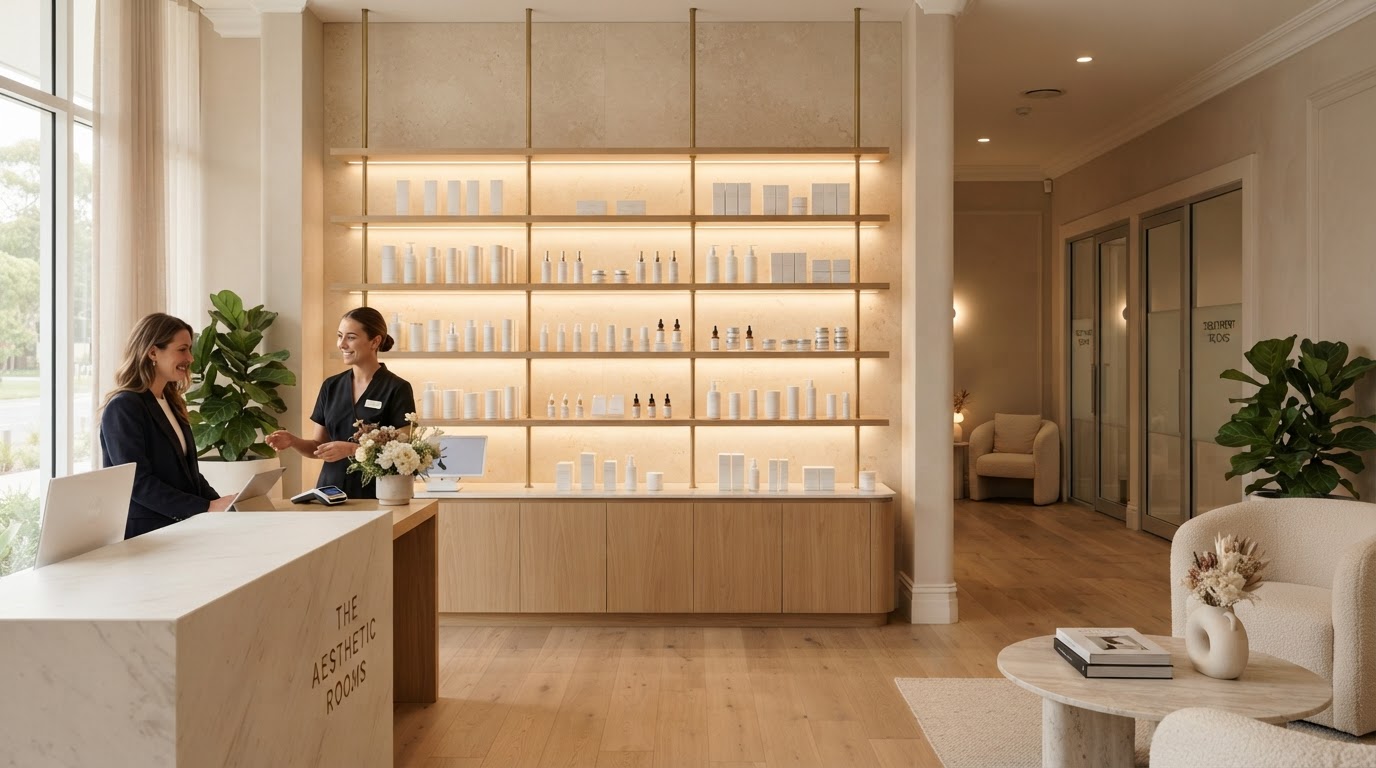
The relationship should not end at shipment. For med spas and aesthetic practices especially, look for a partner who provides educational materials, product training, branded catalogs, recommendation guides, and intake forms. This support is what turns a box of products into a retail revenue stream. Learn more about why Inspira Skin invests here.
10. Industry Experience with Your Audience
A manufacturer who understands med spas is different from one who only works with mass-market e-commerce. Ask about their experience with your specific audience — dermatology practices, plastic surgery offices, aesthetic clinics, or DTC entrepreneurs. Inspira Skin's leadership brings decades of experience across dermatology, aesthetics, pharmaceuticals, and medical devices. Meet the team here.
11. Customization Flexibility
Even within private label, you want room to make the line your own — packaging selection, label design, curated product assortments, and (at sufficient volume) formula adjustments. Confirm what is customizable and what requires higher minimums or longer timelines. A partner who offers zero flexibility will leave your line looking identical to every other brand they serve.
12. Ongoing Consultative Support
Launching is phase one. Reordering, expanding the line, reformulating, and scaling are phases two through ten. Choose a partner who stays available — who picks up the phone, who reviews your reorder needs, and who helps you plan line expansions as your brand grows. Transaction-only relationships become expensive the moment something goes wrong.
The Manufacturer Evaluation Checklist
Use this checklist on every call. A partner who answers all of these clearly is a serious candidate; one who dodges several is not.
| Criterion | What to Ask | Green Flag |
|---|---|---|
| Formulation stability | Are formulas stability-tested? | Clear yes + specifics |
| MOQs | True per-SKU minimums? | Flexible, stated upfront |
| Sampling | Can I test before buying? | Yes, structured program |
| Packaging | In-stock + premium options? | Both, with compatibility notes |
| Labels | Waterproof + compliant artwork? | Yes + compliance guidance |
| Manufacturing location | Where is it made? | U.S.-based, transparent |
| Lead times | Approval to shipment? | Realistic, communicated |
| Support | Training & marketing materials? | Yes, ongoing |
Red Flags to Watch For
- No sampling program — if you cannot test it, you cannot trust it.
- Hidden minimums — a low per-unit price that balloons once you learn the real MOQ.
- Non-waterproof labels — a partner who treats label durability as your problem.
- Vague lead times — "a few weeks" with no breakdown is a forecast for missed launches.
- No compliance guidance — silence on labeling and claims is a liability waiting to happen.
- Zero post-sale support — if they disappear after shipment, you are on your own when something breaks.
How Inspira Skin Measures Up
Inspira Skin was built around the criteria above. We are a U.S.-based private label skincare manufacturer in Rockaway, New Jersey, offering 80+ professional, pre-stabilized formulations across cleansers, toners, serums, moisturizers, masks, suncare, blemish control, and specialty treatments. We provide flexible MOQs, a structured sampling program, standard and premium packaging suites, true waterproof labels, compliant artwork support, and ongoing marketing and training resources.
Our team works with med spas, dermatology and plastic surgery practices, aesthetic providers, and skincare entrepreneurs — and we stay involved from your first consultation through reorder and line expansion. If you would like to see whether we are the right fit, the next step is a private label consultation.
Frequently Asked Questions
What is the difference between private label and white label skincare?
White label generally means a generic, ready-made product sold to many sellers with little customization. Private label gives you more flexibility in product selection, packaging, labeling, and branding, so your line reflects your brand rather than a shared template.
How much does it cost to launch a private label skincare line?
It depends on the number of SKUs, packaging, labeling, and quantities. A small curated starter collection costs far less than a full line with specialty packaging. For a full breakdown, read our guide on launch costs.
Can I start with just a few products?
Yes. Many successful brands begin with three to six hero products and expand as demand grows. You do not need a full regimen on day one.
Are Inspira Skin products made in the USA?
Yes. Inspira Skin manufactures and packages in the United States with an emphasis on quality, consistency, and professional standards.
Next Steps
Choosing a manufacturer is the foundation of your brand. Once you have shortlisted partners using the checklist above, the fastest way to evaluate fit is to request samples and book a consultation. You can order samples here and book a consultation here. If you are still scoping your line, our skincare brand quiz will recommend formulations and next steps in two minutes.
- 80+ pre-stabilized, professional-grade formulations
- Flexible MOQs and a structured sampling program
- Standard & premium packaging with true waterproof labels
- U.S.-based manufacturing and ongoing consultative support