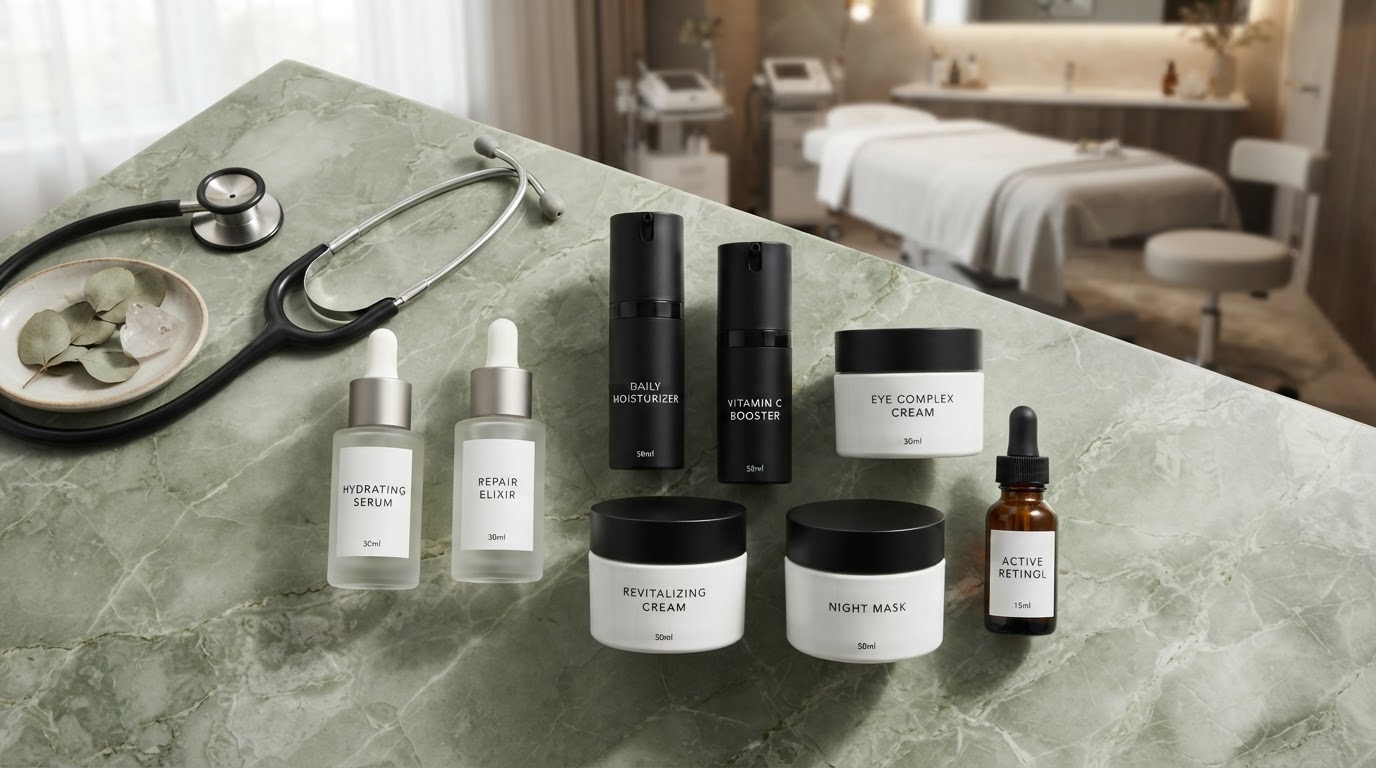
Executive Summary & Quick Answer
How do dermatology practices, plastic surgery offices, med spas, and skincare brands launch their own private label skincare line? Start with a focused 3-to-6 product collection tied to your treatments or brand positioning, choose pre-stabilized professional formulations from a U.S.-based manufacturer, sample before you commit, select packaging and waterproof labels that match your aesthetic, and confirm minimums and timelines up front. A well-built private label line extends clinical trust into the patient's daily routine, captures recurring high-margin revenue that stays inside your practice or brand, and differentiates you from national brands patients can buy cheaper online.
Whether you run a dermatology practice, a plastic surgery office, a medical spa, or an established skincare brand, you already have something most skincare companies spend years trying to earn: trust. Patients and customers come to you for results, and they ask you what to use at home. The question is whether the bottle they leave with carries your name — or a national brand they can find cheaper on a marketplace tomorrow. Private label skincare turns that moment into recurring, high-margin revenue that builds your own brand instead of someone else's.
This guide answers the questions dermatologists, plastic surgeons, med spa owners, and skincare brand founders ask when they are evaluating private label manufacturing: how it works, what it costs, how to choose a manufacturer, what to ask before signing, which products to start with, how packaging and labels work, what the timelines look like, and how to launch without disrupting your practice or brand. It is written for U.S.-based practices and brands that want a clear, practical path from idea to shelf.
What Private Label Skincare Actually Means for Practices and Brands
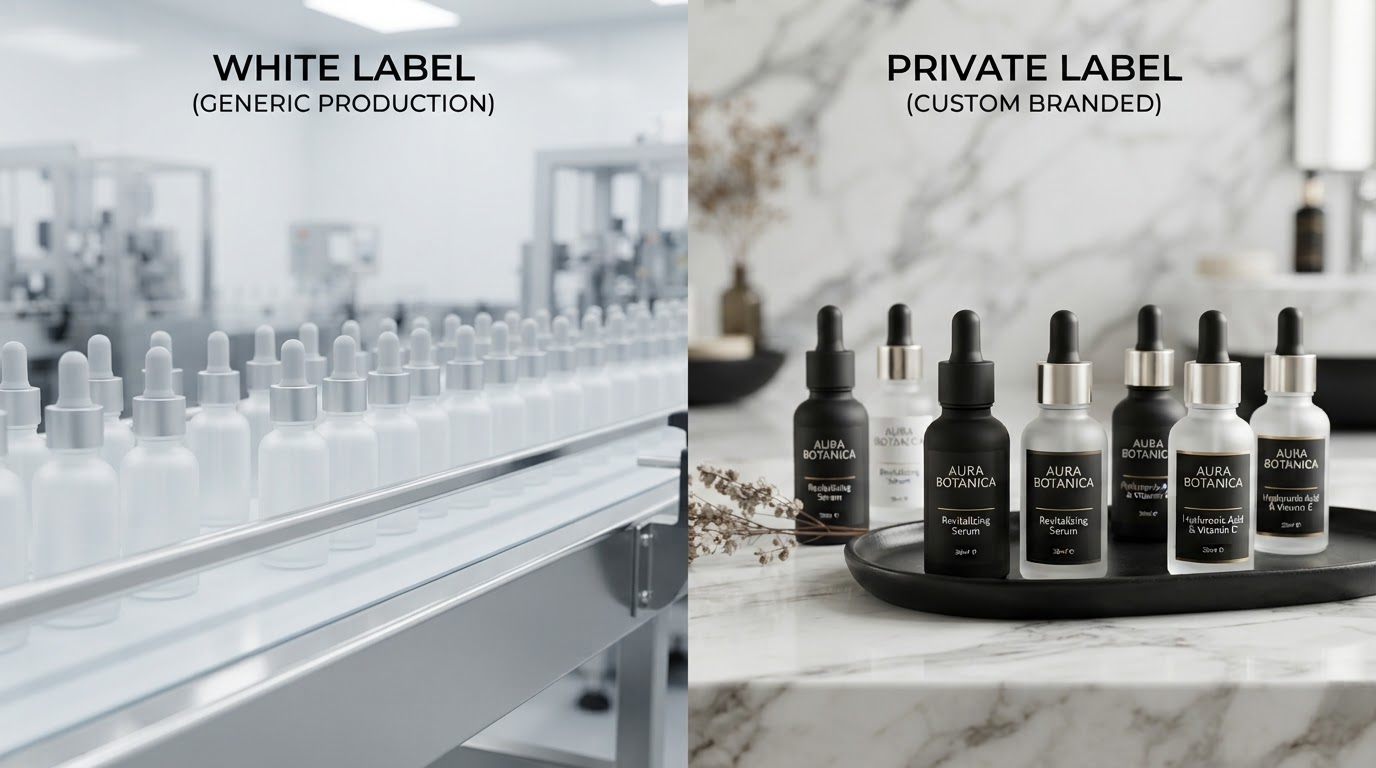
Private label skincare lets you sell professionally formulated, pre-stabilized skincare products under your own brand name, packaging, and visual identity — without developing a formula from scratch. You select from an established portfolio of professional formulations, choose your packaging and labels, and the manufacturer produces, fills, and labels the product to your specification. The result is a branded line that looks and performs like your own, backed by formulations that have already been tested for stability and shelf-life.
For practices, this is different from carrying a national professional brand. You are not reselling someone else's product at a wholesale markup — you are building equity in your own name. For established skincare brands, private label is the fastest way to expand a catalog or launch a new sub-brand without the cost and risk of custom formulation development.
Why Practices and Brands Choose Private Label
1. Capture the revenue that is already leaving your practice
Patients sample a product in your treatment room, then order it online at a discount. You did the clinical work of building trust; a marketplace captured the sale. A private label line closes that leak — the only place to buy your practice-branded serum or cleanser is you. Private label retail typically carries 60%–70% higher margins than reselling national professional brands.
2. Extend clinical trust into the daily routine
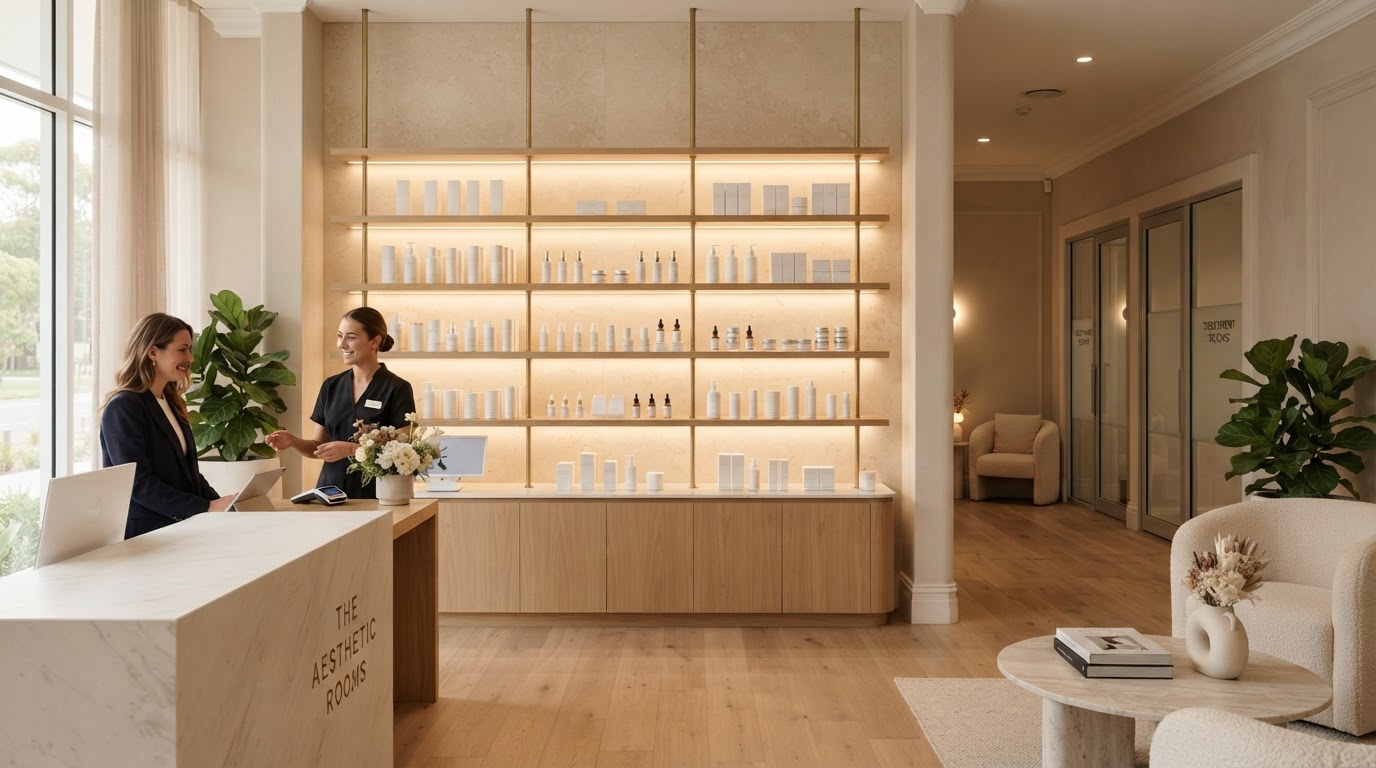
When a patient leaves a chemical peel, laser session, or microneedling appointment, they ask what to use at home. A bottle bearing your practice's name is a direct extension of your expertise — not a recommendation to go shop elsewhere. Every morning and night the patient sees your logo in their bathroom, which keeps your practice top of mind for the next treatment.
3. Differentiate a skincare brand without custom development risk
For skincare brands, private label lets you add proven, stable formulations to your catalog quickly — without the 6-to-18-month timeline and $25,000+ cost of custom development. You control the branding, packaging, and positioning while a manufacturing partner handles formulation, filling, and labeling.
Private Label vs. Carrying National Brands: The Business Case
| Factor | Carrying National Brands | Private Label Line |
|---|---|---|
| Retail margin | 30%–40% wholesale markup | 60%–70%+ typical |
| Price competition | Patients find it cheaper online | Only you sell it |
| Brand equity | Builds someone else's brand | Builds your practice or brand |
| Reorder loyalty | Patient can buy anywhere | Reorders come back to you |
| Control | Brand sets pricing & promos | You control everything |
What Dermatologists, Plastic Surgeons, Med Spas, and Brands Want to Know
Across hundreds of conversations with practices and brand founders, the same questions come up. Here are the answers that matter when you are evaluating a private label manufacturing partner.
How much does it cost to launch a private label skincare line?
Cost depends on the number of products, formulations, packaging, custom labels, and order quantities you choose. A focused starter collection of a few hero products costs significantly less than a full line with specialty packaging. Inspira Skin offers flexible minimums and personalized pricing, and we confirm the details that fit your budget during your consultation. For a full breakdown, read our guide on how much it costs to launch a private label skincare line.
What is the minimum order quantity (MOQ)?
MOQs depend on the formulation, packaging, labeling, and level of customization selected. Inspira Skin offers flexible private label options designed for businesses at different stages of growth, so a single-location practice or an emerging brand can launch without overcommitting to large inventory. Specialty or custom packaging may require larger minimum quantities. Your specific minimums are confirmed during your consultation.
Can I start with just a few products?
Yes. You do not need to launch a full line on day one. Most practices and brands begin with a curated collection of three to six products and expand as sales grow. A focused starter collection is easier to manage, launches faster, and requires less upfront capital. For help choosing, read our beginner's roadmap to choosing products.
Can I sample products before committing to production?
Yes — and you should. Sampling is the most important step in the process. Inspira Skin offers a structured sampling program so you can evaluate texture, absorption, scent, and feel before you choose. You can order samples here.
Are the products made in the USA?
Yes. Inspira Skin manufactures and packages in the United States (Rockaway, New Jersey) with an emphasis on quality, consistency, and professional standards. Domestic production means shorter lead times, consistent quality, and easier communication.
How long does production take?
Initial production typically takes approximately four weeks, while reorders generally take two to three weeks. Actual timelines depend on formulation, packaging availability, artwork approval, press kit approval, and production requirements. We provide anticipated timelines based on the specifics of each project and do not guarantee specific delivery dates.
Do you help with labels and branding?
Yes. We assist with waterproof label production and compliant label artwork, and we provide marketing and training resources to help your team sell the line. Cosmetic labels in the United States have real requirements — ingredient declaration, net contents, product identity, and a responsible party — and a good manufacturer helps you navigate this and flags claims that cross from cosmetic language into drug claims. See our packaging & labeling options.
What is the difference between private label and custom formulation?
Private label lets you select from existing professionally developed, pre-stabilized formulations and sell them under your own brand. Custom formulation involves developing or significantly modifying a formula specifically for your brand — typically requiring additional research, stability testing, higher minimum quantities, costs, and development time. For most practices and emerging brands, private label validates market demand with minimal risk. For a full comparison, read our guide on private label vs. custom formulation.
How to Choose a Private Label Skincare Manufacturer
Your manufacturer is an extension of your practice or brand. If a formula separates on the shelf, if a label smears in a humid bathroom, or if a shipment arrives late, it is your reputation that takes the hit. Evaluate any manufacturer against the criteria that matter for a clinical or brand environment:
- Formulation stability: are the formulas pre-tested for shelf-life and stability? A reputable partner can speak to preservative systems, pH, and compatibility.
- Sampling program: can you touch, smell, and apply the product before committing to production? Never skip this step.
- Flexible MOQs: do the minimums let a single-location practice or emerging brand launch realistically, or are they built only for large e-commerce brands?
- U.S.-based manufacturing: where is the product made? Domestic production means shorter lead times, consistent quality, and easier communication.
- Compliance support: does the partner help with compliant cosmetic label copy and flag claims that create regulatory exposure?
- Experience with practices and brands: a manufacturer who understands clinical environments and brand building is different from one who only works with mass-market e-commerce.
- Waterproof labels: do they produce true waterproof labels that will not smear or peel in a bathroom, or paper labels with a thin coating that fails after a few weeks?
- Ongoing support: is the team available for reorders, line expansion, and consultative guidance as you grow?
For a deeper framework, read our complete guide on how to choose a private label skincare manufacturer.
Which Products to Start With
The most common mistake is trying to launch too many products at once. A focused starter collection of three to six hero products tied to your top treatments or brand positioning sells better, launches faster, and requires less upfront capital. You can always expand.
Recommended starter products by focus
- Post-procedure recovery: a gentle cleanser, a hyaluronic acid serum, and a barrier-repair moisturizer — the three products every laser, peel, or microneedling patient needs at home.
- Anti-aging / daily regimen: a vitamin C serum, a retinol or peptide serum, an eye cream, and a daily SPF — a complete morning-and-night routine.
- Acne / blemish-prone: a salicylic cleanser, a blemish-control toner, and a lightweight oil-free moisturizer.
- Brightening / hyperpigmentation: a glow peel pad, a brightening serum, and a tinted or non-tinted SPF.
- Brand expansion: for established brands, add a cleanser, a hero serum, and a moisturizer to round out a regimen around your existing signature product.
You can explore all of these and more in our formulations catalog — 80+ professional, pre-stabilized formulations across cleansers, toners, serums, moisturizers, masks, suncare, and specialty treatments.
Packaging and Labels That Match Your Practice or Brand
Packaging is your brand's first impression and a daily functional object in your patient's or customer's bathroom. For practices, the packaging should feel clinical-premium — clean, modern, and consistent with the look of your treatment rooms. For brands, it should reflect your positioning, whether that is minimalist, luxury, wellness-forward, or apothecary.
- Clean Clinical White (airless pumps & jars): the most popular practice choice — looks medical, premium, and works with almost any branding.
- Midnight Matte Black: a modern, elevated look for practices or brands with a darker, more luxurious aesthetic.
- Natural Bamboo & Clean White: a wellness-forward look that pairs well with holistic or integrative positioning.
- Frosted Glass & Silver Chrome: a premium, apothecary-style presentation.
In-stock standard packaging keeps costs down and lead times short; premium and custom components are available for a more distinctive look (typically at higher minimums). Review the full range on our packaging & labeling page.
Equally important is label compliance. A good manufacturer helps you navigate U.S. cosmetic labeling requirements and flags claims that cross from cosmetic language into drug claims. Your partner should never let you print a non-compliant label.
The Launch Path: From Consultation to Shelf
A well-run private label program follows a clear, repeatable path. You can see the full private label process here, but in summary:
- Consultation & discovery: we learn your business, audience, goals, and product vision.
- Product selection & formulation: choose base formulations that fit your audience and claims.
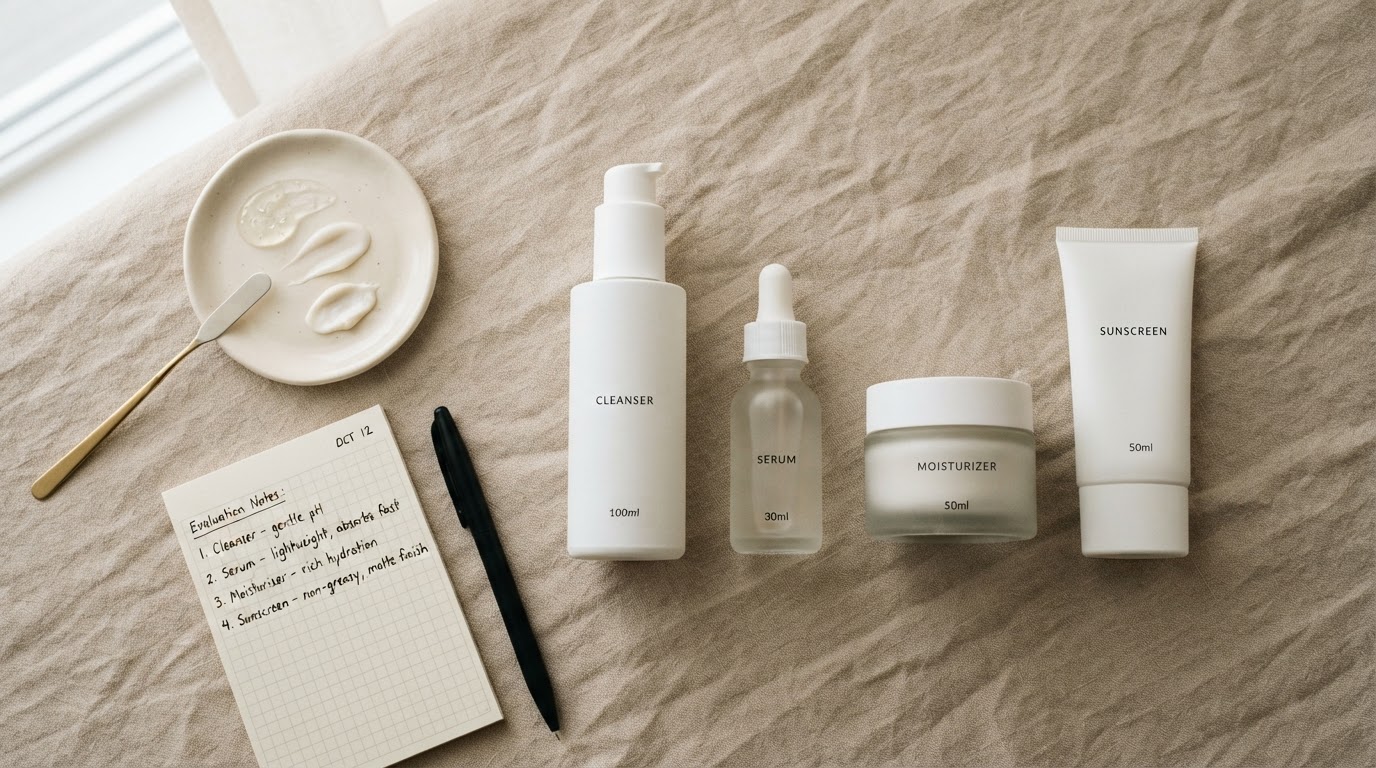
- Sampling & evaluation: you receive physical samples to test texture, absorption, scent, and feel.
- Packaging & label design: select packaging and develop compliant label artwork.
- Production & filling: we manufacture, fill, and label your products to specification.
- Launch support: your branded line ships ready for retail, professional use, or e-commerce.
Next Steps
The fastest way to evaluate whether private label is right for your practice or brand is to request samples and book a consultation. You can order samples here and book a consultation here. If you are still scoping your line, our skincare brand quiz recommends formulations and next steps in two minutes. Learn more about how we work with med spas, dermatology & plastic surgery practices, and established skincare brands.
- 80+ pre-stabilized, professional-grade formulations
- Flexible MOQs and a structured sampling program
- Clinical-premium packaging with true waterproof labels
- U.S.-based manufacturing and ongoing consultative support