Quick Answer
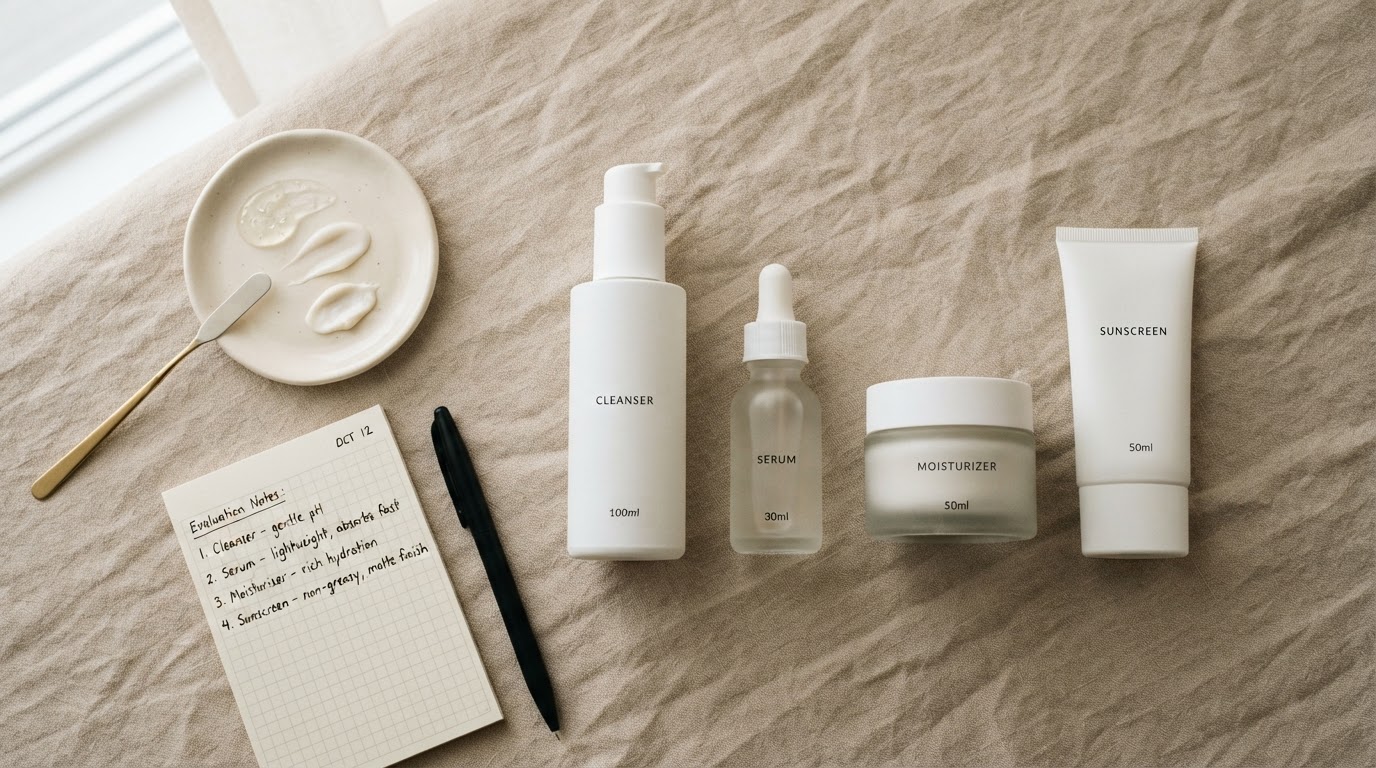
Which products should you add to your skincare line? Start with the products your audience reaches for every day — a cleanser, a targeted treatment serum, a moisturizer, and a sunscreen — then sample those four before you commit to a full collection. The right starter lineup is the one your clients will actually use morning and night, not the longest list you can assemble. Sample first, validate demand, and expand only after your first reorder proves the collection sells.
You know you want to launch a skincare line. You may even know your audience — med spa patients, dermatology clients, aesthetic treatment rooms, or direct-to-consumer shoppers. But the moment you open a formulations catalog and see 80+ products staring back at you, a different problem takes over: which products do you actually add? And just as importantly, which products do you sample first before you commit to a production run?
This is the single most common place a new skincare brand stalls. Not because the work is hard, but because the choices feel infinite and the cost of choosing wrong feels high. This guide gives you a practical roadmap — the questions to ask yourself, a beginner's framework for narrowing the field, and a clear path from sampling to launch — so you stop guessing and start building.
The Problem: Too Many Options, Too Little Framework
Most first-time skincare founders and aesthetic practice owners do the same thing when they start: they browse a catalog, pick the products that sound impressive, and try to launch everything at once. That approach almost always leads to one of two outcomes. Either you freeze and launch nothing because the decision feels too big, or you launch a sprawling collection where half the products never sell and the other half cannibalize each other.
The brands that succeed do something different. They start small, they sample before they commit, and they build their collection around a simple question: what does my audience actually need, every single day? Everything else is a future expansion — not a launch-day requirement.
Questions to Ask Yourself Before You Choose a Single Product
Before you look at a single formulation, answer these questions honestly. Your answers are the filter that turns 80+ options into a shortlist of four to six products.
1. Who is buying this product, and what do they already use?
If you run a med spa, your patients are already buying a cleanser, a serum, and a moisturizer somewhere — probably from a brand you don't control. Your private label line should capture that existing spend, not invent a new category. If you're a skincare entrepreneur selling direct-to-consumer, your customer is solving a specific problem (acne, aging, sensitivity, hyperpigmentation). Name the problem before you name the product.
2. What do I recommend after treatments today?
Aesthetic practices have a built-in advantage here. You already know what you tell patients to use after a chemical peel, microneedling, or laser resurfacing. That post-treatment homecare recommendation is your first product. A gentle cleanser, a hydrating serum, and a barrier-supporting moisturizer are the backbone of almost every aftercare routine — and they're the easiest products to sell because you're already recommending them.
3. What is the daily routine I want my clients to follow?
A skincare line is not a list of products — it's a ritual. The strongest starter collections map to a simple morning-and-night routine: cleanse, treat, moisturize, protect. If a product doesn't fit into that daily rhythm, it's an expansion, not a launch-day essential.
4. What is my budget for a first order?
Every product you add is a minimum order quantity (MOQ) you have to meet. A focused collection of four products is achievable on a modest first-order budget. A collection of twelve multiplies that commitment before you've sold a single bottle. Know your number before you fall in love with a product. For a full cost breakdown, read our guide on how much it costs to launch a private label skincare line.
5. Which products will my clients reorder?
The real revenue in a skincare line is not the first sale — it's the reorder. A cleanser runs out in a month or two. A serum runs out in six to eight weeks. A moisturizer is a daily-use product. These are the products that build recurring revenue. A specialty mask used once a week is a nice add-on, but it's not the engine. Lead with the products your clients will repurchase.
6. What can I realistically sample and evaluate?
Sampling is how you de-risk the entire launch. But you can't sample everything at once — not well, anyway. Narrow to a shortlist of four to six products, sample those, and evaluate them against a clear set of criteria (texture, absorption, scent, feel, and how they fit your brand). You can order $5.00 samples here to start that evaluation today.
The Beginner's Roadmap: From Blank Page to Launched Line
Use this step-by-step roadmap to move from "I don't know where to start" to a launched, branded collection — without the paralysis.
| Step | What You Do | Outcome |
|---|---|---|
| 1. Define your audience | Name who buys, what they already use, and the problem you solve. | A clear customer profile |
| 2. Map the daily routine | Sketch the morning-and-night ritual you want clients to follow. | A 3–4 product skeleton |
| 3. Build a shortlist | Browse the formulations catalog and pick 4–6 products that fit the routine. | A focused product shortlist |
| 4. Sample the shortlist | Order physical samples and evaluate texture, feel, scent, and fit. | Validated product selection |
| 5. Choose packaging & labels | Select packaging and design waterproof labels that reflect your brand. | A cohesive brand presentation |
| 6. Place your first order | Confirm MOQs, approve artwork, and begin production. | A launched starter collection |
| 7. Sell & expand | Launch, track reorders, and add products only as demand proves out. | A growing, profitable line |
Which Products to Sample First: The Starter Collection Framework
If you're stuck on where to begin, start here. This is the collection that works for the widest range of audiences — med spas, dermatology practices, aestheticians, and direct-to-consumer entrepreneurs alike — because it maps to a complete daily routine.
Product 1: A Daily Cleanser
Every routine starts here. A gentle daily cleanser is the product your clients use morning and night, which makes it your highest-reorder, highest-visibility product. Choose a formula that fits your audience — a gentle cleansing oil for dry or mature skin, a creamy cleanser for sensitive skin, or a clarifying cleanser for acne-prone or oily skin. Sample two cleanser options and pick the one that feels right.
Product 2: A Targeted Treatment Serum
This is where your line earns its reputation. A serum is the product that delivers visible results — brightening, hydration, anti-aging, or blemish control — and it's the product clients ask about most. A Vitamin C serum for morning brightening, a hyaluronic acid serum for hydration, or a retinol serum for age support are all proven, high-demand options. Sample the serum that matches your audience's top concern.
Product 3: A Daily Moisturizer
A moisturizer seals in the serum and completes the routine. It's the product clients reach for after every cleanse, which makes it a reliable reorder driver. Choose a lightweight moisturizer for oily or combination skin, a richer cream for dry or mature skin, or a barrier-supporting formula for sensitive or post-treatment skin. This is the third product in your starter collection and the one that makes the routine feel complete.
Product 4: A Daily Sunscreen (Optional but Powerful)
If your audience is aesthetic or medical, sunscreen is the single most-recommended post-treatment product — and it's the one patients are most likely to be using incorrectly or not at all. A mineral SPF rounds out the daily routine and positions your line as a complete, clinically credible collection. If budget is tight, launch with three products and add sunscreen as your first expansion.
That's it. Four products — cleanse, treat, moisturize, protect — is a complete, sellable, reorderable skincare line. You can explore the full formulations catalog here to start building your shortlist.
How to Evaluate Samples Like a Professional
Sampling is not about picking the product that sounds the best on paper. It's about experiencing the product the way your client will — in their hands, on their skin, every day. When your samples arrive, evaluate each one against these criteria:
- Texture & absorption: Does it feel good on the skin? Does it absorb cleanly or leave a residue?
- Scent: Is the fragrance pleasant, subtle, and appropriate for your audience?
- Application feel: Does it glide on, or does it drag? Is it lightweight or heavy?
- Brand fit: Does this product feel like your brand? Would it look right in your packaging with your label?
- Routine fit: Does it layer well with the other products in your starter collection?
Test each sample for several days, not minutes. A product that feels great on first application but pills or separates by day three is the wrong choice. The sample stage is your insurance policy against a costly production mistake — use it.
The Biggest Mistake Beginners Make
The most expensive mistake is not choosing the wrong product — it's choosing too many products. A first launch with twelve SKUs ties up capital in inventory that may not sell, dilutes your marketing focus, and makes it harder for clients to understand what your brand stands for. A focused launch with four hero products is easier to sample, easier to merchandise, easier to market, and far easier to reorder.
The second-biggest mistake is skipping the sample stage entirely. A formula that looks perfect on a spec sheet can feel wrong in the hand — and your clients will feel what you felt, only they'll blame your brand for it. Sampling is the cheapest way to avoid that. You can order samples here before you commit to anything.
When to Expand Beyond Your Starter Collection
Once your starter collection is selling and reordering, expansion becomes obvious: you'll see which products run out fastest, which clients ask for next, and which gaps appear in the routine. Common second-wave additions include a toner (to refine and prep), an eye treatment, an exfoliating mask or peel pads, and a targeted specialty treatment.
The rule is simple: let demand drive expansion, not aspiration. Every new product should answer a request your clients are already making. For a deeper look at the full process, read our guide on how to start a skincare line and build a standout brand.
Frequently Asked Questions
How many products should I launch my skincare line with?
For most first-time brands and aesthetic practices, three to four products is the sweet spot — a cleanser, a serum, a moisturizer, and optionally a sunscreen. This maps to a complete daily routine, keeps your first-order budget manageable, and gives you a focused collection that's easy to sample, merchandise, and reorder.
Which skincare products should I sample first?
Sample the products that make up your daily-routine skeleton first: a cleanser, a targeted serum, and a moisturizer. These are the highest-use, highest-reorder products, so they're the ones most worth getting right before you commit to a production run. You can order $5.00 samples of each from our sample shop.
Do I need to sample every product before I launch?
No. Sample your shortlist of four to six products, not the entire catalog. The goal is to validate the products you'll actually launch with — not to test every option. Once your starter collection is proven, you can sample expansion products as you grow.
What if I'm not sure which serum is right for my audience?
That's exactly what a consultation is for. Our team helps you match formulations to your audience, your treatment menu, and your brand positioning — so you sample with confidence instead of guessing. You can also take our two-minute skincare quiz for a starting recommendation.
Can I start with just one or two products?
You can, but a single product is hard to build a routine — and a brand — around. Two or three products that work together (a cleanser and a serum, or a cleanser, serum, and moisturizer) create a more complete experience and drive better reorder behavior than a lone SKU.
Your Next Step: Stop Guessing, Start Sampling
Choosing the right products for your skincare line doesn't require a chemistry degree or a massive budget. It requires a clear audience, a simple daily-routine framework, and the discipline to sample before you commit. Start with four products. Sample them. Launch. Let your clients tell you what to add next.
If you'd like help narrowing the field — or you want a partner who'll guide you from formulation selection through packaging, waterproof labels, and launch — the fastest next step is a private label consultation. We'll map your audience, recommend a starter collection, and help you sample with confidence.
Book a Consultation
Map your starter collection with our team.
Schedule a callTake the Skincare Quiz
Get formulation recommendations in two minutes.
Start the quizShop Samples
Try $5.00 samples of our most popular formulations.
Order samples- 80+ pre-stabilized, professional-grade formulations to choose from
- $5.00 sample program so you test before you commit
- Flexible MOQs and a guided consultation to build your starter collection
- U.S.-based manufacturing with waterproof labels and launch support